Led design on the CMS now behind 100% of editorial traffic
Led design on the CMS now behind 100% of editorial traffic
Context
Context
Business Insider was mid-rebuild on a new CMS when I joined, but early adoption revealed the strategy was flawed. The WYSIWYG approach looked good in theory and broke down in practice.
Business Insider was mid-rebuild on a new CMS when I joined, but early adoption revealed the strategy was flawed. The WYSIWYG approach looked good in theory and broke down in practice.
Problem
Problem
The legacy CMS was brittle and backend-heavy, slowing editorial output and blocking innovation. The redesign introduced its own issues: rigid UI patterns, poor scalability across story types, and a preview experience that didn't reflect how editors actually worked.
The legacy CMS was brittle and backend-heavy, slowing editorial output and blocking innovation. The redesign introduced its own issues: rigid UI patterns, poor scalability across story types, and a preview experience that didn't reflect how editors actually worked.
What I did
What I did
Reframed publishing strategy from WYSIWYG to WYSIWYN ("what you see is what you need"), shifting focus from visual fidelity to editorial usability
Reframed publishing strategy from WYSIWYG to WYSIWYN ("what you see is what you need"), shifting focus from visual fidelity to editorial usability
Before
Before

The original pattern: rigid and hard to scan.
The original pattern: rigid and hard to scan.
After
After
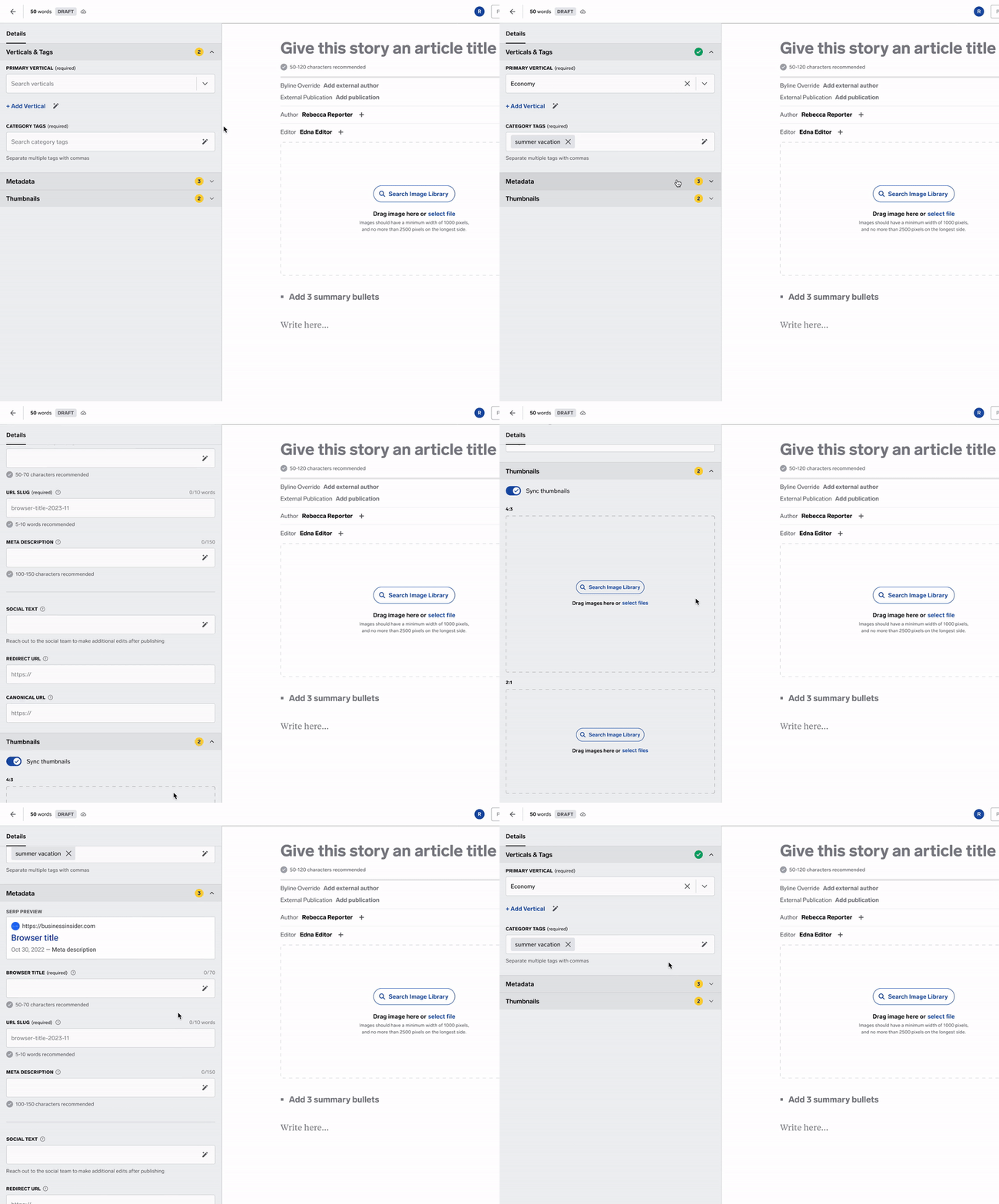
Accessible accordion panels that streamlined navigation.
Accessible accordion panels that streamlined navigation.
Partnered with SEO editors to design real-time validation patterns like smart character counters, reducing publishing errors
Partnered with SEO editors to design real-time validation patterns like smart character counters, reducing publishing errors
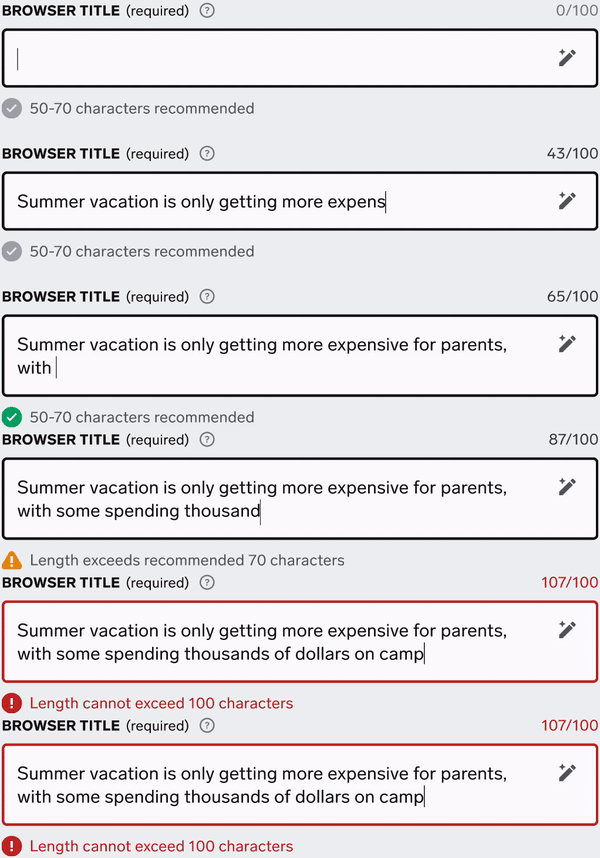
Character counters and inline validation gave editors confidence without slowing them down.
Character counters and inline validation gave editors confidence without slowing them down.
Built the CMS component library from scratch
Built the CMS component library from scratch
How it evolved
How it evolved
Legacy
Legacy

Fragmented and backend-heavy, with minimal UX investment.
Fragmented and backend-heavy, with minimal UX investment.
MVP
MVP

Early foundations, but still constrained by the WYSIWYG approach.
Early foundations, but still constrained by the WYSIWYG approach.
Final
Final

A flexible, scalable platform built around how editors actually work.
A flexible, scalable platform built around how editors actually work.
What we shipped
What we shipped
Slideshow builder
Slideshow builder

Bulk uploads and fullscreen management, built to emulate familiar legacy behaviors.
Bulk uploads and fullscreen management, built to emulate familiar legacy behaviors.
Liveblogs & custom pages
Liveblogs & custom pages

Real-time news coverage, sponsored content, and specialized formats.
Real-time news coverage, sponsored content, and specialized formats.

On-demand autofill and suggestions, called out by execs for efficiency.
On-demand autofill and suggestions, called out by execs for efficiency.
Outcome
Outcome
Scaled from 6 beta users to 150+ active journalists
Scaled from 6 beta users to 150+ active journalists
93% of editorial traffic within 3 years
93% of editorial traffic within 3 years
Legacy system fully deprecated June 2025, now powering 100% of editorial traffic
Legacy system fully deprecated June 2025, now powering 100% of editorial traffic